Chapter 4
Data on the Afghan diaspora in Germany
How many Afghans live in Germany, when they arrived — and what the federal admission programme provides for.
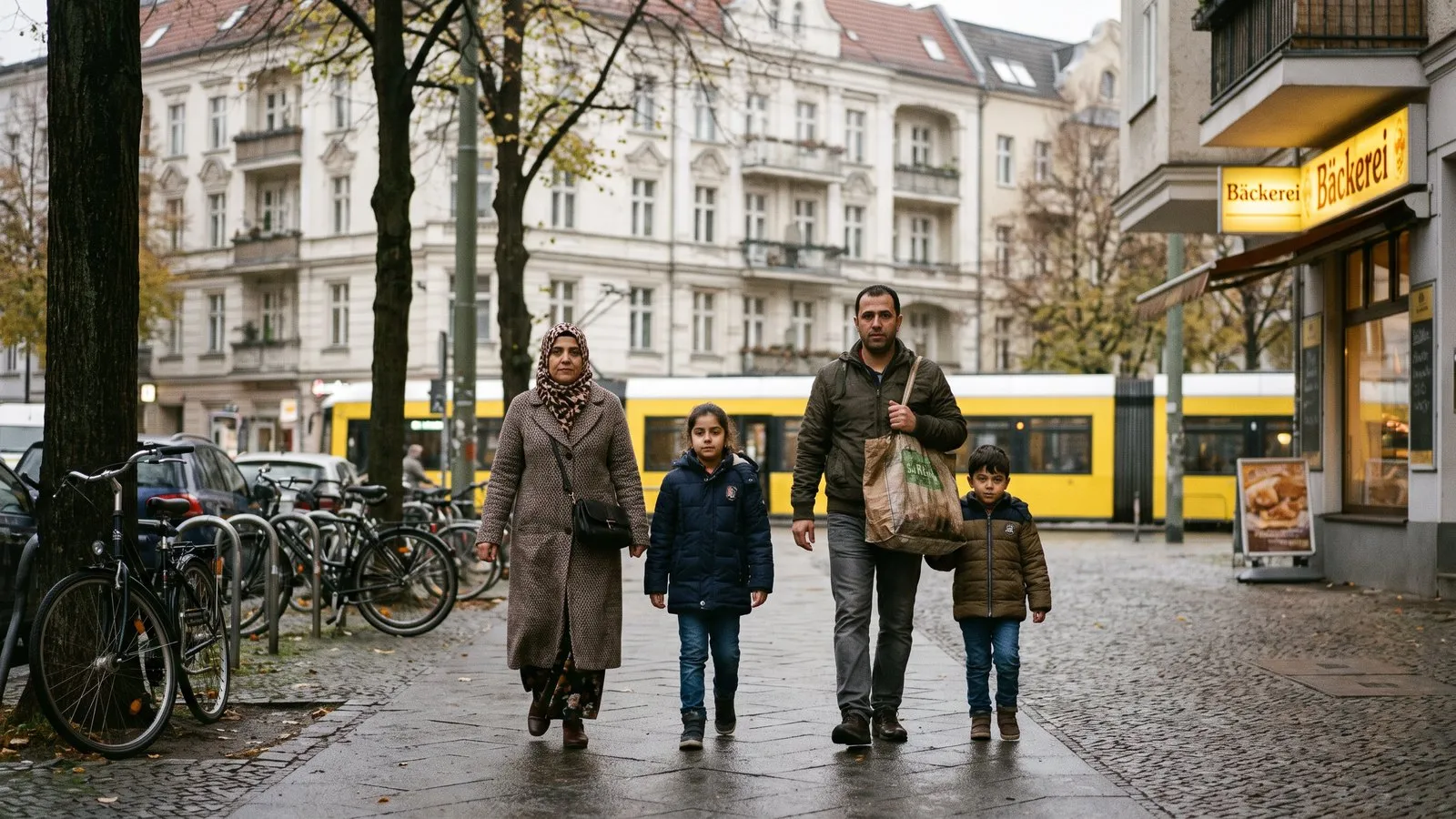
Migration from Afghanistan to Germany goes back several decades, but increased markedly in 2015 and 2016 in the course of refugee migration. In 2023, more than 419,000 people of Afghan nationality lived in Germany, corresponding to around 0.5 % of the total population. By comparison, in 2003 the figure was just under 66,000 (Friedrichs and Popp 2024).
Afghan immigrants were already coming to Germany before 1979, mostly for study or employment. An Afghan community became established in Hamburg in particular from the 1960s onwards, as Afghan business people dominated the carpet and goods import trade there. Today more than 15 % of all people of Afghan migration background in Germany live in the Hanseatic city.
The first large wave of refugee migration began in 1979 with the invasion by the Soviet Union. It was above all the political and social elite that left the country. Refugees found sanctuary in Germany too, but their numbers remained low for a long time. In 2001, 72,000 people of Afghan nationality lived in Germany (Popp 2022).
The deterioration of the situation in Afghanistan is reflected in the protection rates. Between 2015 and 2021 the rate averaged 44 %. In 2022 it rose to 83 %, and in 2023 it stood at 76 %. Since the end of 2021, Afghans seeking protection have also been deemed to have a positive prospect of remaining, which gives them faster access to integration courses, work and training.
In response to the political and humanitarian situation since 2021, Germany expanded its admission programmes. These enabled Afghans to enter the country by regular means, mostly without an asylum application. Instead they received a humanitarian residence permit, initially limited to three years, which grants access to work, training, integration courses and social benefits. Family reunification is also possible. By mid-2024, more than 33,600 people had been able to enter Germany via the local staff procedure, the human rights list, the bridging programme and the federal admission programme (Friedrichs and Popp 2024).
Federal admission programme for Afghanistan
Since the Taliban’s renewed seizure of power, numerous Afghans have been affected by threats and persecution — among other things because of their commitment to democracy and human rights, their cooperation with Western states or organisations, their gender or their sexual orientation.
The federal government has therefore undertaken to admit around 45,000 particularly endangered people and their family members. These include:
more than 25,100 former Afghan local staff and their relatives,
as well as more than 19,900 further endangered people identified in cooperation with civil society organisations.
By April 2024, more than 33,200 people had already entered the country, among them 20,300 local staff with families and 12,900 further endangered Afghans with families. The federal admission programme, launched on 17 October 2022, is intended to continue enabling these particularly threatened groups to enter Germany (Auswärtiges Amt 2024).