AfA Today · Topic 9
Afghan Diaspora – Developments since 2021
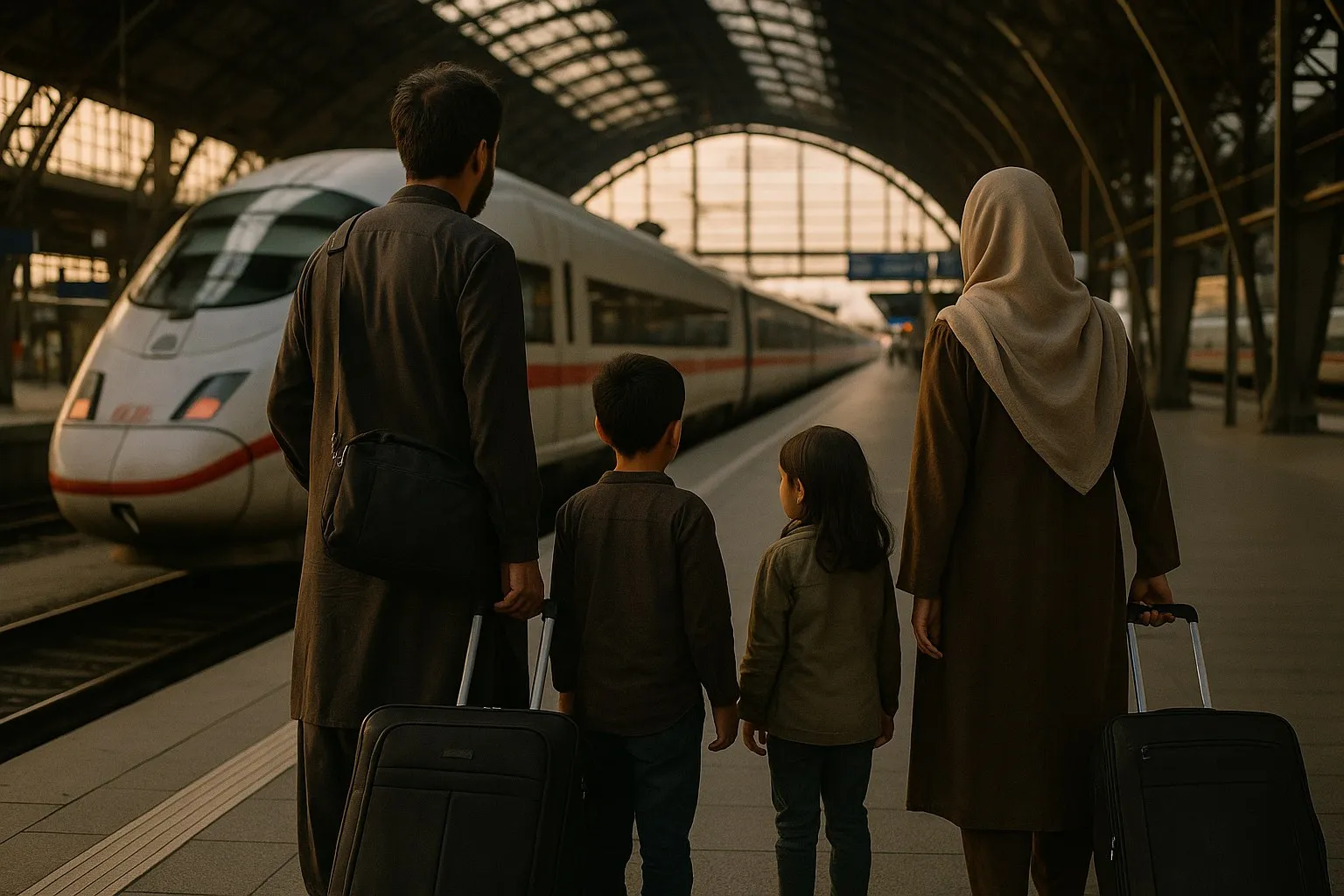
The renewed Taliban takeover in August 2021 fundamentally changed the dynamics of migration from Afghanistan to Germany and led to a sharp increase in the number of protection seekers as well as to far-reaching adjustments in German asylum and admission practice.
Current protection status and demographic relevance
- Second-largest group of protection seekers: As a result of the political upheavals, the number of Afghan nationals in Germany rose to more than 419,000 people by the end of 2023. Around 321,300 Afghan protection seekers currently live in Germany. After Syrians, they thus form the second-largest population group of protection seekers in the country.
- High legal certainty: Today, the Afghan community in Germany stands on a stable legal foundation: around 93 % of all registered Afghans hold a secure residence status. The vast majority (approx. 249,000 people) hold a temporary humanitarian residence permit.
BAMF practice in transition: the split protection rate
- Steep rise after the Taliban’s return: After August 2021, the Federal Office for Migration and Refugees (BAMF) drastically changed its assessment of the situation. While the protection rate had averaged a moderate 44 % historically before 2021, it shot up steeply after the change of power (2022: 83 %; 2023: 76 %) and reached an adjusted rate of around 93 % in 2024. A generally positive prospect of being allowed to stay also massively accelerated access to language courses and the labour market.
- Current asylum practice: Formally, the adjusted overall protection rate remains at a very high level. The reason for this is a landmark ruling by the Court of Justice of the European Union (EuGH), which grants Afghan women full refugee protection across the board on account of their systematic deprivation of rights by the Taliban regime.
- Collapse for single men: The authorities’ decision-making practice for men stands in stark contrast to this: the protection rate for young, single Afghan asylum seekers has fallen drastically in current practice.
Special state admission programmes and long-term integration
- Evacuation and admission programmes: As a direct response to the crisis in Kabul, the Federal Government expanded the legal admission routes (including the local staff procedure, the Federal Admission Programme and the human rights list). These enable persons at risk to enter the country regularly without an asylum procedure, with an immediate humanitarian residence permit limited to three years. By mid-2024, around 33,600 people had entered via these routes – to date, this number has risen to just under 37,000 evacuated persons.
- Strong naturalisation trend: Since 2021, the willingness to participate permanently in society has been empirically at a record high. Almost all Afghan migrants surveyed plan to remain in Germany in the long term and are seeking German citizenship. In the period from 2016 to the end of 2025 alone, just under 48,000 Afghans were successfully naturalised in Germany.
Sources
- BAMF – Bundesamt für Migration und Flüchtlinge (2026): Aktuelle Zahlen zu Asyl.
- Destatis – Statistisches Bundesamt (2026): Ausländerzentralregister & Einbürgerungsstatistik.
- EuGH – Europäischer Gerichtshof (2024): Urteil zu den Rechtssachen C‑608/22 und C‑609/22 (Flüchtlingsschutz für afghanische Frauen).
- FRH – Flüchtlingsrat Hessen (2026): Asylzahlen veröffentlicht: Schutzquoten im freien Fall.
- Friedrichs, J. / Popp, S. (2024): Die afghanische Diaspora in Deutschland: Entwicklung, Strukturen und Integration. In: Bundeszentrale für politische Bildung (bpb).
- MDI – Mediendienst Integration (2026): Faktenpapier: Wie viele afghanische Flüchtlinge leben in Deutschland?
- Pro Asyl e.V. (2026): Meldung zur BAMF-Entscheidungspraxis bei afghanischen Asylsuchenden.
- SVR – Sachverständigenrat für Integration und Migration (2025): Forschungsbericht: Angekommen und transnational vernetzt – Afghanische Einwanderer in Deutschland.