
AfA Today · Topic 1
Flight & Displacement
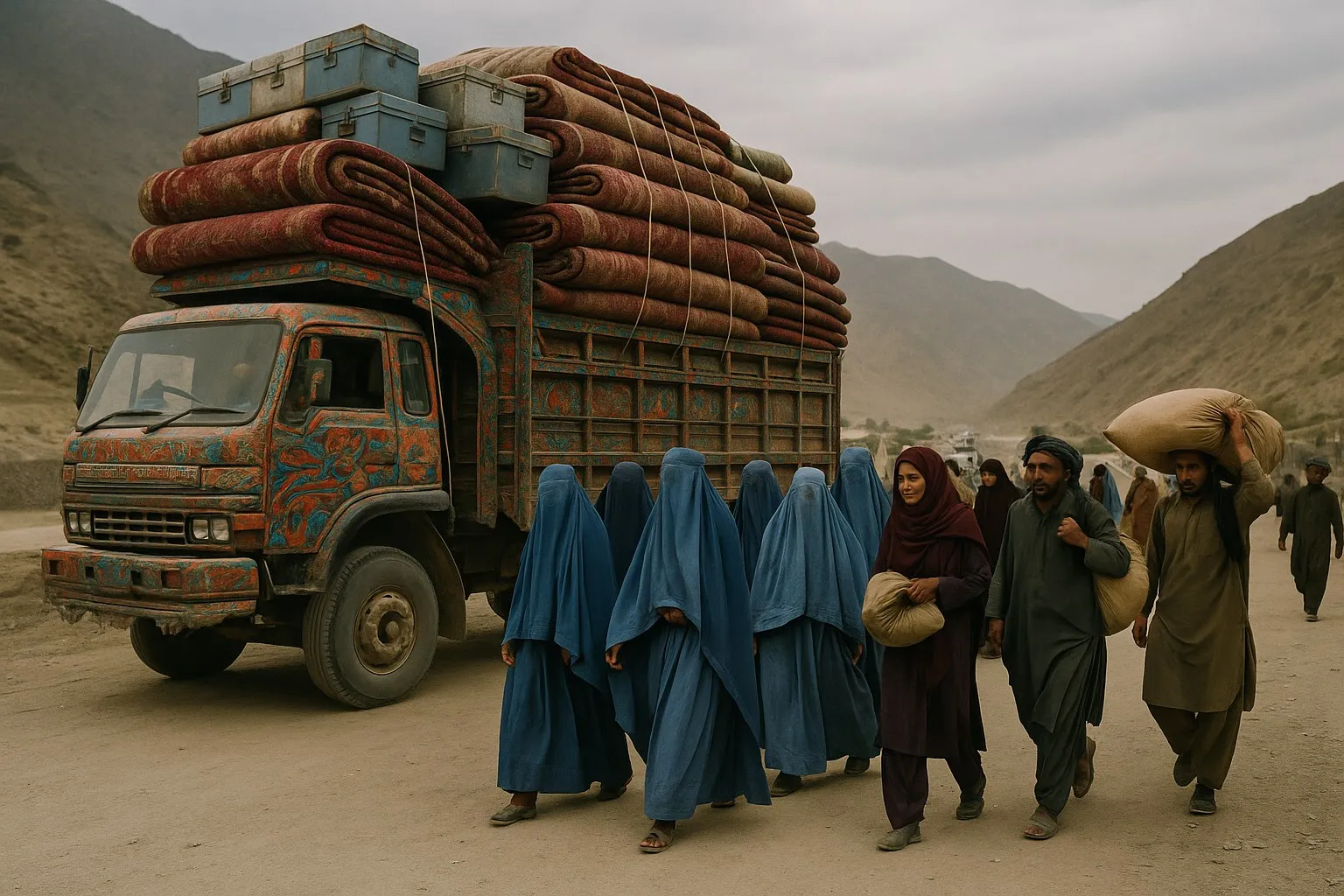
The geopolitical situation and the ongoing conflicts have caused one of the largest and longest-lasting displacement crises in the world. The course of events so far shows a dramatic development:
A. Situation at the end of 2021 (after the change of power)
- Refugees worldwide: At the end of 2021, 2.6 million Afghan refugees were registered worldwide (UNHCR 2024).
- Concentration in neighbouring countries: Of these, 2.2 million people were living in the directly neighbouring states (UNHCR 2024).
- Internally displaced persons: There were 3.5 million internally displaced persons within Afghanistan, joined by a further 800,000 newly displaced persons in 2021 alone (UNHCR 2024). Women and children made up around 80 per cent of Afghan refugees (UNHCR 2024).
B. Developments up to mid-2026
- Refugees worldwide: At the end of 2025, around 3.7 million Afghan refugees were registered abroad worldwide (UNHCR 2026).
- Main host countries: The neighbouring countries continue to bear the main burden; around 1.6 million displaced Afghans live in Iran alone and about 1.3 million in Pakistan (UNHCR 2026).
- Dramatic wave of returns: Since the end of 2023, the immense pressure (deportations and reprisals) in the neighbouring countries has led to massive flows of returnees. In 2025 alone, around 2.9 million Afghans returned to their home country – mostly involuntarily (UNHCR 2026).
- Situation within the country: Despite the waves of returns, around 3.2 million people still remain internally displaced within Afghanistan (UNHCR 2026).
Sources
- UNHCR – UN-Flüchtlingshilfswerk (2026): Global Trends. Forced Displacement in 2025. unhcr.org
- WB – World Bank (2026a): Afghanistan Development Update, Spring 2026. Press release “Afghanistan’s Economy Shows Resilience but living standards are falling”. worldbank.org