AfA Today · Topic 4
The Health Crisis
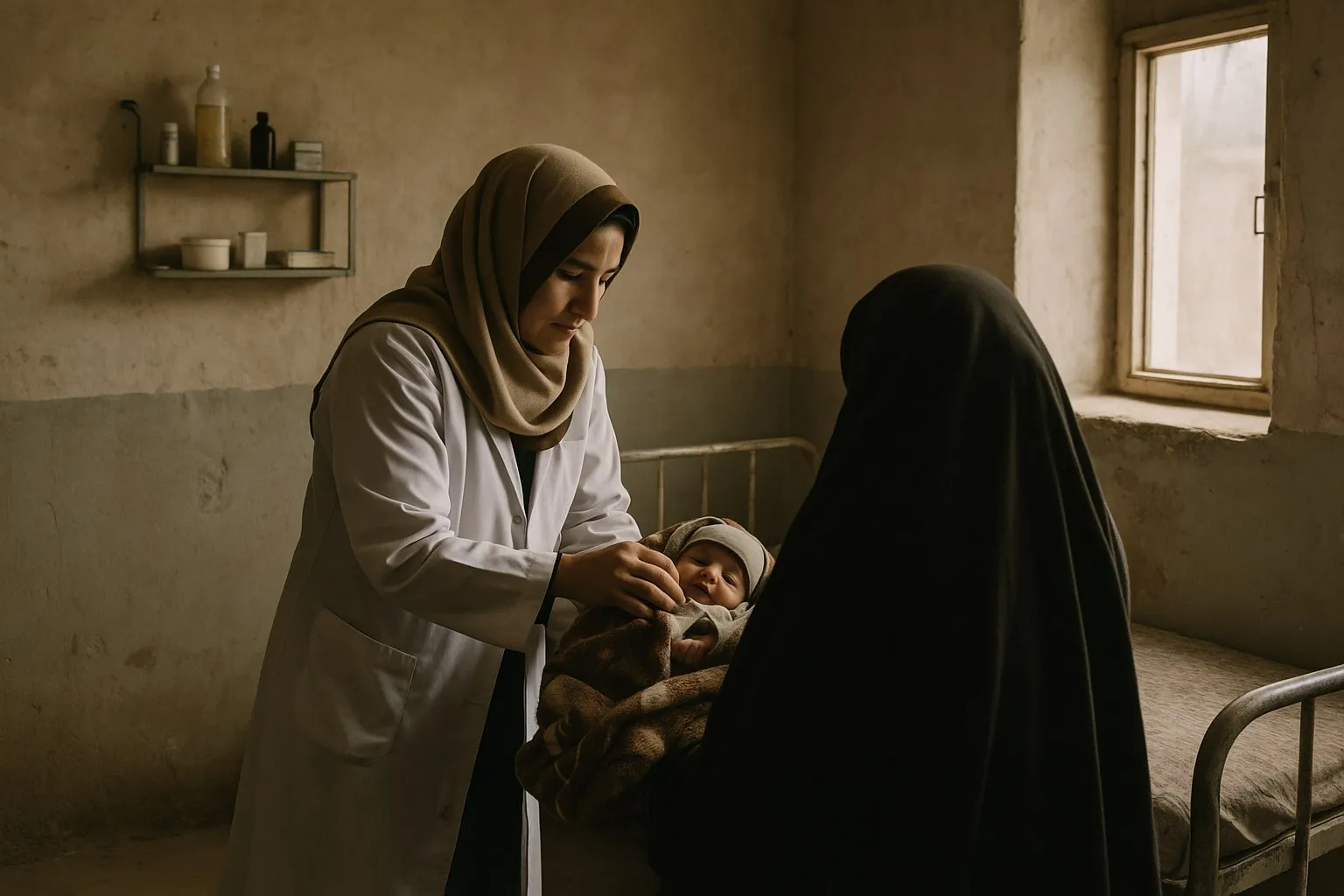
Medical care in Afghanistan is in a catastrophic state. Decades of conflict, devastating natural disasters and the massive withdrawal of international funding after the Taliban takeover in August 2021 have brought the health system to the brink of total collapse. In 2026, an estimated 14.4 million people require urgent health assistance. [1, 2, 3, 4]
The core problems
1. Massive underfunding and clinic closures
The drastic collapse in international aid funding has paralysed the infrastructure. By early 2026, more than 400 health facilities had to close, as a result of which more than 3 million people have lost direct access to basic medical care. The World Health Organization (WHO) warns that at times only a fraction of the required budget is covered. [1, 2, 3, 4]
2. Acute malnutrition among children and mothers
The health crisis is inseparably linked to a devastating hunger crisis. [1]
- Children in the crosshairs: Around 3.7 million children under the age of five suffer from acute malnutrition. According to UNICEF forecasts, this number threatens to rise to more than 4 million by 2027. [1, 2, 3, 4]
- Mothers at risk: More than 1.2 million pregnant and breastfeeding women are acutely malnourished. Clinics report a sharply rising number of premature births and underweight newborns. [1, 2, 3]
3. Exclusion of women and collapsing obstetric care
The systematic restrictions imposed on women by the de facto authorities have a fatal impact on medical care: [1, 2]
- Since women are prohibited from university education and must comply with strict requirements in public (such as the Mahram rule), there is an acute shortage of female specialist staff. [1, 2]
- Female patients may often only be treated by women. The result: Afghanistan continues to record one of the highest maternal mortality rates in the world. [1, 2]
4. Wave of returnees and epidemics
The forced mass return of more than two million Afghans from the neighbouring countries Iran and Pakistan is putting enormous pressure on the remaining system. At the same time, the lack of clean drinking water and the absence of vaccination campaigns are fostering outbreaks of infectious diseases such as measles, acute watery diarrhoea (AWD) and polio. [1, 2, 3, 4]
Sources
- WHO (World Health Organization): Afghanistan: WHO Health Emergency Appeal 2026 (published in February 2026) – data on the needs of 14.4 million people and infection risks.
- UNICEF Deutschland: Krise in Afghanistan: Hunger, Gewalt, Naturkatastrophen (ongoing reporting 2026) – figures on child malnutrition and relief operations.
- UNOCHA (United Nations Office for the Coordination of Humanitarian Affairs): Afghanistan: Humanitarian Update & Humanitarian Needs and Response Plan 2026 – reports on clinic closures, budget cuts and the situation of women. [1]
- Deutsches Ärzteblatt: Gesundheitsversorgung in Afghanistan verschlechtert sich (August 2026) – reports on underfunded clinics and the situation of obstetric care.
- Human Rights Watch: World Report 2026: Afghanistan – analysis of the effects of Western aid cuts and restrictive laws on the civilian population. [1]
- BBC News (2024): Afghan women “banned from midwife courses” in latest blow to rights
- UNFPA (2025): UN / UNFPA Afghanistan press conference, Andrew Saberton (UN Web TV / UNifeed)